This is not about ragebait (please, no more ragebait).
This IS about content that is too good.
When I’m helping brands figure out what kind of content to create, I like to lean on an idea Priya Parker calls “generous exclusion.”
If you’re not familiar with Priya Parker, she wrote the very popular (and great read), The Art of Gathering, and is a facilitator, speaker, author, etc. focused on helping people gather well, have sustained dialogues, and connect better.
Which makes it all the more interesting that she is such a big proponent of generous exclusion.
Generous exclusion: “the intentional drawing of a temporary line for the good of the guests and to help activate and fulfill a gathering’s purpose.” (her words)
Basically: if you want to decide who your gathering is for, you also have to decide who is it not for. And if you hold that line, it actually benefits your guests more and creates a more purposeful and effective gathering… because it’s been designed specifically for those people.
Back to the point:
Good content is also a kind of gathering.
Content — any kind of show, writing, art, online content, YouTube channel, what-have-you — says “hey, come here, look at this thing!”
And good content tends to gather a little group of people around it and says “hey, this thing was made for people like you.”
We almost always talk about who our content is for. But rarely (if ever?) do I hear teams talk about who their content is not for.The problem is that if we don’t decide who our content is not for, we can’t serve well the people who our content is for.
If our email newsletter is for people who already use our product… but we don’t want to exclude people who don’t… then our email newsletter isn’t really for our product users. It just becomes a bland mashup of whatever feels relevant to our product that week.
If our blog content is for experienced HR professionals… but also kind of for any HR professional… and their bosses, and their bosses boss, maybe, if they forward it to him, and the CFO, since they might make decisions too… then the blog isn’t really for HR professionals. It’s for SEO.
When we forget to practice generous exclusion with our content (and content strategies), we end up making bland, haphazard, or surface-level content that tries to be everywhere at once, doing everything for everyone who might be kinda maybe interested.
Instead, we could decide exactly who our content is and isn’t for, and serve that one group really, really well. It’s okay if some people think our content is too boring, or too high-level, or too in-the-weeds, or whatever — because those people that our content is for will be really, really grateful.
So go ahead, make something that someone could hate.
Because if your content can’t really be hated (or at least disliked) by anyone… it’s probably not really enjoyed by anyone, either 🙃
I joined Alex Hilleary on the Superpath podcast a few weeks to talk about (what else?) my thoughts on blogging and how we can make it better. The following is an excerpted transcription of our conversation, lightly edited for concision and readability.
If you’re into these ideas, go listen to the whole thing!
Alex: Your piece begins with a provocative question, “When’s the last time you read something that was longer than 1,500 words online without skimming?” I’ll admit, I’ve had a much harder time lately reading long-form online. And I’ve been thinking about why that is. One, I think I’ve kind of lost trust in long form content, but I’m also bad at staying focused online. Is it the content that’s changing? Is it my focus? Is it the context of the Internet that’s changing? Or are we sitting here in the age of AI pretending that there was a golden age when we used to actually read deeply online?
Rachel: I think all of those things play a factor. I’m not a huge believer in the idea that no one can focus anymore and we just need everything in six-second TikToks. I — many of us — have no problem sitting down to read an hour before bed, or watch a 2-hour, 3-hour movie in theaters, or listen to a podcast, or whatever. Of course, we can do things to strengthen or weaken that focus muscle, but overall, we can focus when we want to. So I don’t know that that’s actually the biggest problem.
I think what you said about losing trust in long-form in general is a huge piece of the puzzle. I don’t know that there was necessarily a golden age, but there was a time where I read a half-dozen or more blogs every day. But I think over time, for many factors, our expectations of what we would receive from long-form content has degraded, so we’re also bringing a degraded focus and effort to it because we’re not getting a good payoff. Or, at least, we’re expecting that we won’t get a good payoff for our cognitive effort.
I think over time our expectations of what we would receive from long-form content has degraded, so we’re also bringing a degraded focus and effort to it, because we’re expecting that we won’t get a good payoff for our cognitive effort.
I think that has been a kind of self-fulfilling prophecy and like, loop of doom. The shallower content gets, the more we skim; and then we’re like “Well people only skim online” so then we make the content really skimmable and then it just like.. continues to degrade.
But I also think that contributes to, and is caused by, the broader context of the Internet. The Internet, maybe always, but definitely now has become a place that is not for critical thinking and creating memory structures and diving into a really deep topic and so on. That’s what the format of like, a book, is for. And I think maybe we thought at one point, like “Oh maybe the Internet will become that!” But then it didn’t.
And so we can bring that energy to a book, but somehow it’s really hard to bring that energy to the Internet, even if we want to. Because intuitively we know that’s not what Internet content does. And so our brains just automatically calibrate for this format or context that we’re in and it’s really hard to override that.
Alex: I really like how you think about that. It’s so important to think about the context that a piece of content fits within. Like, newsletters in my inbox for example. My inbox is not a place of focus, it’s a place of bouncing around…
Rachel: And like, complete chaos and disarray. Or at least for me.
Alex: But I can focus on the NYT, though, like on their website. Although there is some trust built in, I may know a particular author or something and I can get into that focused mindset more. But turning more to the format of the blog in particular, I think there are some interesting transitions from blogging being about sharing thoughts to companies sharing thoughts and eventually becoming a marketing function and over time, the role that SEO and AI played in eroding trust in that format. How do you see some of those key moments?
Rachel: I didn’t get into content marketing until 20181, which was pretty much peak “skyscraper-content”2 era. But I think of early blogging as connection. Someone had ideas they really cared about or things they really wanted to share, and the Internet was a place where they could find other people who also cared about those, often very niche, things. And so blogs were kind of the channel where you would put out yourself and your ideas and other people could find you.
And then in time companies started doing that and it started being monetizable and we got Google and search and the blue links and so on. The skyscraper technique was a bit of an inflection point where the goal transitioned from having something interesting to say to getting people onto your website.
And, to be clear, there was a period of time where this actually worked! Like, the technique became popular because it was effective. So there was an idea that this was how you made content that “worked” from a business angle. In turn, that created blog posts that got longer and longer and longer, but they usually didn’t have the depth of idea or structure to back up that length. And I think that started (or expedited?) the process of eroding the trust and connection that we had previously been able to expect from blogs.
Blog posts got longer and longer and longer, but they usually didn’t have the depth of ideas to back up that length. And I think that started the process of eroding the trust and connection that we had previously been able to expect from blogs.
I think a lot of times we look back on this and we say “Oh, the problem is the length, blogs should be short.”
But that’s not quite it, because we do read long things, right? Some of the most popular book series right now are these enormous 500-page, 8-volume book series, and everyone’s reading them. So it’s not just about the length. But the content has to fulfill the demand that this length asks of us, especially within the context of the Internet, or else no one’s going to read it.
Alex: Yeah, and I think I’m also thinking of this like, a lot of these foundational issues happened before AI and AI is just making it worse, right? As soon as we put CTAs and stuff on blogs, you’re not really optimizing for the reader and it creates this gamified side of things. But there’s another big moment with AI, at least in the way I think about it, where it feels like AI has played a role in my own mistrust.
Before, no matter what I was reading, I knew that someone wrote it — maybe it was good or bad, but someone put some thought into the words on the page. And now, I just… don’t trust that anymore in most contexts, unless it’s really someone I know or who I know is really committed to not using AI. I find myself disengaging more because I don’t know, like, “Did anyone actually think about this or did they just put in a prompt and then post these paragraphs and haven’t even considered what they’re actually saying?” What role do you think AI plays in all of this?
Rachel: That’s such a huge question, but I think you’re spot-on that we used to have a kind of implicit social contract that words were (generally) written by someone who had something to say. Of course, sloppy content has been a problem long before AI came on the scene. You could always hire a ghostwriter or just slop out a bunch of bad ideas and not really care about how you communicated them. That’s always been a problem.
But I think before, there was this distinction of sloppy content vs. good content, but that social contract was mostly in place. And now that we’ve brought AI into this process, we’ve broken the implicit trust that someone wanted to communicate something and not just use some content as a means to an end. That trust has probably been eroding for a long time, but AI is accelerating it and making the loss of that social contract even more visible.
Even when we see something that might look interesting or look good on the surface, there’s a piece of us inside that’s asking like, “Can I trust this?” Like it looks like someone wrote it and it seems like someone cared about it, but did someone care about it? Or am I being duped? Am I just reading a fancy ad right now and thinking like, “oh me and this other person both care about this” and on the other end is just a robot that’s writing this because the person wants to optimize my attention? That feels gross!
And even if we’re not consciously thinking about that, I think many of us feel it a little bit and it makes us pull away. It’s subconscious, but it’s almost like a form of self-preservation. And maybe that sounds a little psychological, but content is psychological, marketing is psychological.
Alex: Yeah, because ultimately all of this is about trust-building, right? That’s actually the really important piece of how you get someone coming back over and over. So, to bring it back to the blog: do you old-school blogging can make a comeback? Maybe as an art form? What are your hopes for your collective content blog, The Art of Content?
Rachel: I’ve launched several micro-blogs in the last year or so, so I think yes, of course. I at least hope that we can bring blogging back. But I think it will require us being ok with some of the drawbacks or “downsides” of the form.
Like, a drawback of writing books, for example, is that they take a really long time, right? A downside of writing a really honest, thoughtful, authentic micro-blog is that you can’t outsource it to AI and it’s not always going to be “a profitable channel” and so on. I think culturally, we’re really obsessed with making all of our hobbies, side hustles, and everything in our life profitable and productive. We live in a very capitalist culture, which can have some benefits and it also has some drawbacks, too.
But I hope this blog — and myself — can be something and someone who’s saying “Hey, this kind of content matters and more of us should do it, and I’m gonna do it, and other people should too.”
And I think sometimes we just need someone else to go first.
If you’re unfamiliar with this term, I go into it more on the podcast. Basically, it’s the idea of looking at what articles and pages are ranking highest in search results, and then writing something similar but adding more context, content, advice, etc. to your article to make it outrank. You’re essentially creating a taller (longer) “skyscraper” that builds on what’s already ranking. There are better and worse ways to do this, but that’s the general idea. ↩︎
I’ve talked to a number of folks in the past few months who do similar work to me and who I think have “good content” online, and when I asked them about their content strategies, most of them went “Uh, well…”
And honestly, same. Why is it that I have made literally dozens of content strategies for brands and I have never had one for myself?
No matter how much I told clients “you know, it would really help to have some strategy behind this…” the most strategy I ever had for my own content was something like “making this content will bring me new clients (i hope)” which sounds a lotttt like “making this content is going to bring us tons of new customers (we hope)” so…
pot, meet kettle 👋
It’s easier to dish out advice than to take it, okay?
Okay.
So I finally sat down and made a quick-and-dirty content strategy for myself.
These are the exact steps I used, so it’s not fancy and it almost certainly could have some improvements, but it is fast and includes the most effective pieces from the strategies I build for clients. If you’re in the same boat I was in, feel free to use this process for yourself.
Who I think this would work for: solos and freelancers, small businesses, founders who are managing marketing for startups, and potentially even brands with very small teams who just need something scrappy. Also teams who want to do more employee advocacy branding could probably use a simplified version of this for their employees!
How long is this gonna take? It really did take me four hours, YMMV. I split it up over several days, so the whole thing was done in about a week and a half.
What do I need? Pen & paper, some kind of database or table (I used Notion), some sense of what you want your content to do for you
Also, I know this is going to have a LOT of detail, so instead of leaving your heads swimming with no concrete examples or leaving your heads swimming trying to make sense of my actual messy ideas, I’m going to use this (somewhat fictitious) example:
In this example, I’m going to be selling a new workshop helping freelancers and startups build a quick-and-dirty content strategy in 4 hours (work with me here, okay? 😂), so my strategy examples will ladder up to that goal.
Ok, onward:
1. Figure out where you’re going (30 mins)
You can’t (well, shouldn’t) take a hike without having some kind of destination or end-point in mind. Making content is the same. Sending out random acts of content (or as Brandon Marcus says, “confetti content“) with no real sense of how — or if — it helps you with your goals (let alone your audience with theirs!) is the equivalent of wandering around in a forest assuming you’ll find the summit eventually.
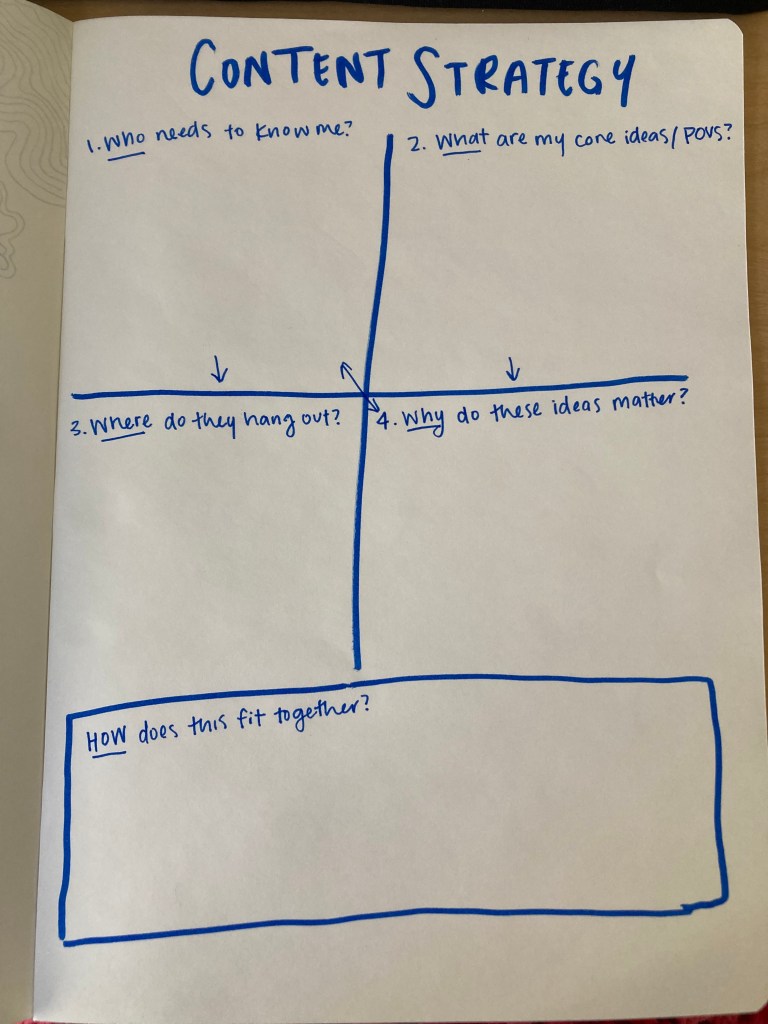
This matrix is how you figure out what the heck you’re trying to do with your hike, I mean, with your content.
It’s a super simple version of the foundational questions I use with clients when I build content strategies for them. In short, you’re answering the classic “Ws”:
Who needs to know about me? Who’s the audience that I can help (or our product helps)?
What are my core ideas / POVs? What do I believe about my work / industry / processes / etc. that set me apart, that my clients should know? What ideas shape the way I make decisions and do work for clients?
Where does my audience hang out?
Why do these ideas matter (to my audience and to me)?
I recommend drawing this out on a sheet of paper, because doing early brainstorming with paper and pen does cool things with your brain that I won’t take the time to dive into here (just trust me, though).
The little arrows I’ve drawn on my matrix are just reminding me how these answers are going to connect.
You can start in either of the first two quadrants, whichever feels easier. They should inform each other — your core ideas about your work likely helps narrow down who needs to know you. Then you can flesh out why those ideas matter to that audience and where to share them.
Using our example, I might determine the following:
> Who: core audiences might be solopreneurs or startup founders who know content can help them, but don’t know what to talk about or where to start > What: the longer you spend on a content strategy, the less likely you are to implement it; writing more content can be counterproductive if it’s not the RIGHT content, etc. (I don’t know if I actually believe those things, but they would be good spiky POVs) > Where: probably LinkedIn, maybe some Slack communities or YouTube > Why: this audience probably doesn’t want to invest too much time or money into “building a content strategy” but they also might be losing traction and momentum by using a “throw spaghetti at the wall” method instead.
Then I added a box at the bottom for how those pieces fit together, where I’m starting to answer questions like:
What content tactics and types are best going to match my ideas, channels, goals, and audience
What distribution channels match the content and audience
How I’m going to share those ideas based on what the audience needs
Side note: when I’m working with clients, I spend a lot more time first on the goals and the why in general, like, why does your content even need to exist?
What’s it doing for your business?
What’s it doing for your audience?
What bigger business goals and objectives is content going to support?
Because my business is, well… mine, and I’ve spent a lot of time thinking about content and my business goals, I have this info in my head already.
But if you’re copying this for yourself and you don’t know why you’re making content, figure that out first. The matrix above can help!
2. Plan your route (2 hours)
Next step: fleshing out the steps from point A to point B. Also known as: connecting all the dots.
I made a table in Notion (you could use GDocs or Sheets) with the following columns. You’ll want to have a separate column for each audience / problem pair. It roughly correlates to the matrix (and expands on it) like so:
Who’s the audience?
Pulled from quadrant 1 on my matrix
What’s their problem?
I pulled core problems from quadrant 4 on my matrix. Why my ideas matter is directly tied to what problems this audience is experiencing. So, what are those problems? This is a bit implicit in my head from the matrix, but now I’m making it explicit.
What’s the typical solution to this problem?
As it says. How do I see most people trying to solve this?
Big idea / core POV
From quadrant 2 of the matrix. In general, one or two of my “big ideas” or “core POVs” will correlate to how I recommend clients to solve this problem, usually counter to how folks often attempt to solve it. It’s my special sauce, so to speak.
Flesh out the idea
Here I make a bunch of notes or bullet points that go into more detail about what I see work, how I see things, why I believe this, etc. etc.
What’s the process?
Sketch out in bullet points how I’ve solved this problem for clients in line with my POV
What’s an example? Stories / illustrations
Jotting down real stories / examples from my own work or client work, or illustrations that demonstrate my process or my ideas.
What’s the result? Where do they want to be / where and how do they end up here?
Here I’m making notes on the transformation — what results do my clients get from my processes that are not achieved by the typical solutions. What’s different from where they started? How are their problems solved?
I do this for each of the core problems I’ve outlined for each audience (2-3 core problems for 3 audiences, so I had seven of these total, with some overlap between them).
And if you’re sitting here thinking, holy crap, I thought this was gonna be quick, this is so much work, this step DID take me the longest. But! By the time I finished, it was becoming super clear to me exactly what I needed to be talking about a lot more.
And, better yet: now I can clearly see how all the things I might talk about fit together — how they relate to my readers’ needs, problems, things they’ve tried, things they want to try, things they’re not sure how to do but want to learn, etc. etc.
Here’s your example, following our theme:
Who the audience is
solopreneurs or startup founders who want to do better content but don’t know where to start in sharing their ideas
What’s their problem?
throwing spaghetti at the wall and getting discouraged that their content isn’t getting traction or results
What’s the typical solution to this problem?
try to do more content, try new channels, use AI, write about different things, hire a ghostwriter, give up
Big idea / core POV
writing more content can be counterproductive if it’s not the RIGHT content
Flesh out the idea
not all visibility is useful — finding the right audience and giving truly valuable content = more important
need to know WHAT to say not just saying something for the sake of being visible
a simple strategy can be more useful than a long complicated one — finding a MVS (minimum viable strategy) that helps point your content toward your goals
etc. etc.
What’s the process?
(bulleted points on the process i use to make a content strategy for this audience)
What’s an example? Stories / illustrations
(examples of how it’s worked for me or others)
What’s the result? Where do they want to be and how do they end up here?
confidence: knowing they are making content for the right audience and their goals
save time: do less with more results
etc. etc.
3. Figure out your friends (30 mins)
If you’re REALLY pressed for time, I would say this step is optional, but it’s so helpful for me.
In my strategy doc, I made a heading for each of my three core audiences, and under each, I added a space for the following:
Needs: What their core needs are (re: content)
Fears: What they’re most afraid of (re: content). We don’t talk about emotion very much in B2B but it drives so much of our work and decision-making. Understanding what your audience is afraid of and trying to avoid is really important to figuring out, you know, how to help them avoid that. I use a couple of personality type frameworks to help me sort through core fears and apply them to content.
Goals: What are they aiming for? Usually correlated with their needs — they need certain things to help them achieve these goals.
Desires: What do they want? Not quite the same as goals, desires are more the emotion under the goal. For example, the goal might be to make content an effective channel or demonstrate ROI but the desire is to be seen as a valuable part of marketing, or earn their bosses’ trust, or do work their proud of without burning out, or etc. etc. etc.
Then, I write a few examples of people I actually know (or somewhat know) who I think fits this audience category. This is just to help me ground my content by feeling like I can write to a specific person.
An example, following our previous ones:
> Audience: solopreneurs or startup founders who want to do better content but don’t know where to start in sharing their ideas > Needs: figuring out where to start, what to talk about, what will work. basic needs: direction, structure. > Fears: looking stupid in front of peers / online, realizing they have nothing to say, being seen as incompetent or saying something wrong. (I would then break these down more using my frameworks and apply this to how these impact the ways they approach content.) > Goals: Making content a sustainable way to drive new leads or clients > Desires: to feel confident in the content they’re making knowing that it is working for them; to be seen as a thought leader in their space
4. Hike your hike. (1 hour)
Ok, time to land the plane. Finally, I’ve made a simple content database (also in Notion) with the following categories:
Content idea / hook
What is this piece going to be about?
Pillars / Big Idea / POVs
What is the core POV that I’m focused on in this piece of content?
Stage
I don’t use TOFU / MOFU / BOFU, but that framework or another one will work, I have my own secret one 😈 and usually make custom ones for clients
Audience
Which audience is this for
Problem
Which audience problem is this addressing?
Status
i.e. not started, in progress, ready to go, whatever
Basically, I took everything from my matrix and my database from step 2 and translated it into individual content pieces I could write.
I’m looking at the details I added in the columns:
Typical solutions
Flesh out the idea
Process
Examples
Results
And I’m asking myself, how can I talk about this? What is a post I could make that shares this idea, this example? What are five different formats I could use to talk about this? And I’m just dumping those into this final database.
For example:
> Content idea / hook: How I made my content strategy in 4 hours > Pillars / Big Idea / POVs: writing more content can be counterproductive if it’s not the RIGHT content > Stage: process / how-tos > Audience: solopreneurs or startup founders who want to do better content but don’t know where to start in sharing their ideas > Problem: not having time for strategy, not knowing what to say, throwing spaghetti at the wall and getting discouraged that their content isn’t getting traction or results > Status: complete
This part can also take awhile, I’ve spent about an hour on mine and my database currently has 64 entries. I haven’t written these posts, but that’s fine — the idea is there, and it has a solid foundation for why that post is actually going to be useful to a particular reader and how it’s going to ladder up to my goals as well.
Instead of just writing content based on whatever’s on my mind, I can pull from this database and know exactly how an idea fits within:
My big ideas about content
My actual processes and results I’ve gotten for clients
Who my audience is
What they care about, need, want, and fear
What they’ve already tried (and what they should try)
It also makes it so much easier to create series (we love serial content and so do your algorithms) and find the narrative through-lines to guide your audience through from “learning about your ideas” to “let’s work together.”
So there you have it, folks! Four hours to a complete quick-and-dirty content strategy.
Of course, I still create ad-hoc content based on things that are top of mind, or trending topics I want to jump on, or whatnot; but this gives me both (a) a framework for 90% of what I write and talk about, and (b) a framework for embedding those random thoughts and ad-hoc pieces into my broader strategy, so that those are still working for me, too.
Take what’s helpful and ditch the rest, and if you ever need a hand doing something like this — for yourself or for a brand — feel free to reach out!
One of my favorite things about having a print newsletter is actually the physicality behind it.
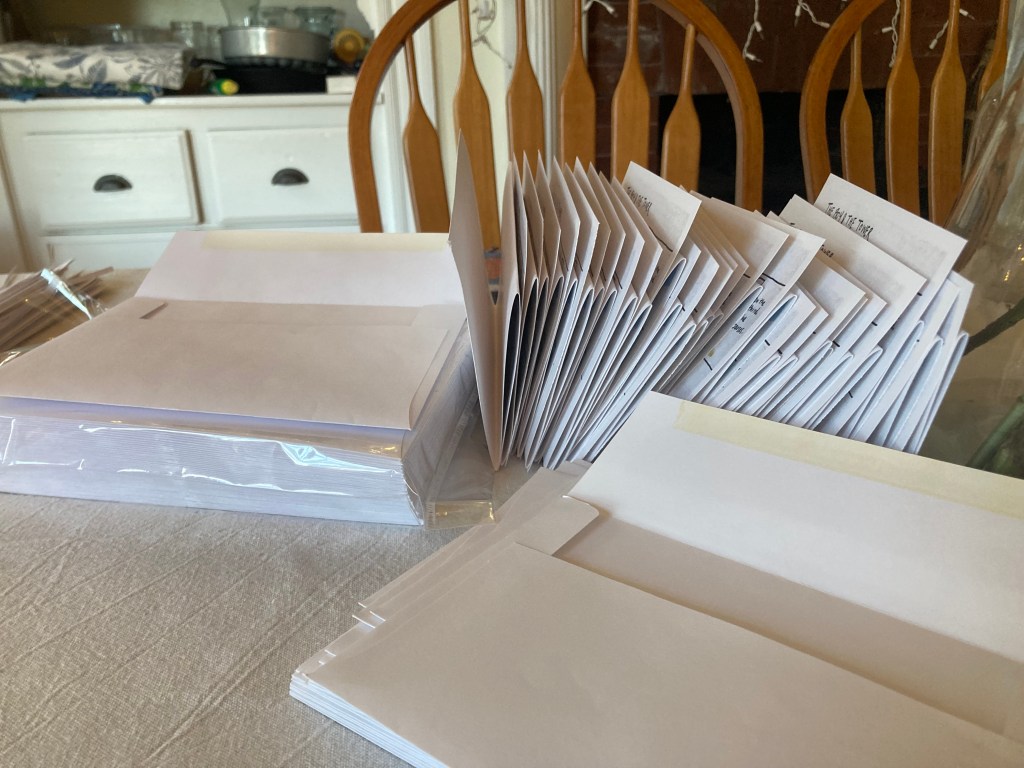
Every month, I have to fold and assemble the newsletters, and then address, stuff, seal, and stamp the envelopes, a process that now takes me, on average, 3-4 hours. It’s “monotonous” work, but I’ve started saving videos or things I want to watch or listen to in the background for this task.
It feels so good to have something repetitive to do with my hands while I catch up on things I wanted to watch, without feeling bored (“ugh, 27th envelope won’t seal right”) or “binge-y” (“ugh, I just watched YouTube for 2 hours”).
All that to say: here’s everything I watched this month while stuffing (aside from a couple of things I didn’t finish).
This 12-minute interview with Disney composer Alan Menken (of many of the iconic ’90s Disney songs) was so lovely and nostalgic. 10/10.
One year ago I started an experiment that many of you have participated in (perhaps unknowingly): I started a print newsletter.
Newsletters are so “in” right now. Everyone kept telling me “You need a newsletter.” blah blah blah…
And I kept resisting. Like, look, I write a lot of email newsletters for clients, so I know they work. I know they’re fun to write (for me). I know how effective email is.
But, I reasoned, everyone already has an email newsletter. How many emails can one person read? Usually far fewer than the number they’re already subscribed to.
As I examined why I was feeling so much hesitation, an idea formed. What if I didn’t send out an email newsletter? What if I sent it to people’s actual mailboxes? Like… in print?
The Experiment
My basic premise for the experiment was simple:
Instead of offering people yet another email newsletter, I will offer a monthly print newsletter at a super low cost (just covering expenses).
My hypothesis was something like:
People love novelty, and they’ll be more interested in something tangible that comes to their real mailbox than another email newsletter. Plus, I’ll enjoy it more, which will make the output better for the reader.
I time-boxed the experiment, giving myself three months to test the idea. My “factors” for the experiment were simple:
Did I enjoy making it?
Did anyone else seem interested in receiving it?
If no to either, then I would scrap it; if yes to both, then I’d keep it going.
My main hesitation was that I thought people wouldn’t be interesting in paying for a newsletter when there are sooooo many free ones and basically more digital content than one could ever consume.
About which, I was quite wrong.
The Early Days
I started by emailing a small group of freelance friends and my US-based clients and invited them to sign up. Seven people got my very first edition.
my very first edition 🙂
For the first few months, nothing much happened.
I didn’t talk about it online, or anywhere really. I didn’t invite more people to sign up. I didn’t really… do anything 🤷♀️
I enjoyed the process of making it, and a few people emailed me to say they loved receiving it, so I kept going.
But (obviously, or else I wouldn’t be writing this) something interesting started to happen.
I started getting DMs about it (“Um… I heard you have a print newsletter?”) and new subscribers. People who knew me reached out to talk about it. People who didn’t know me were signing up just because it sounded cool. I got a handful of new subscribers in the spring, but my list more than doubled over the summer, and grew even faster throughout the fall.
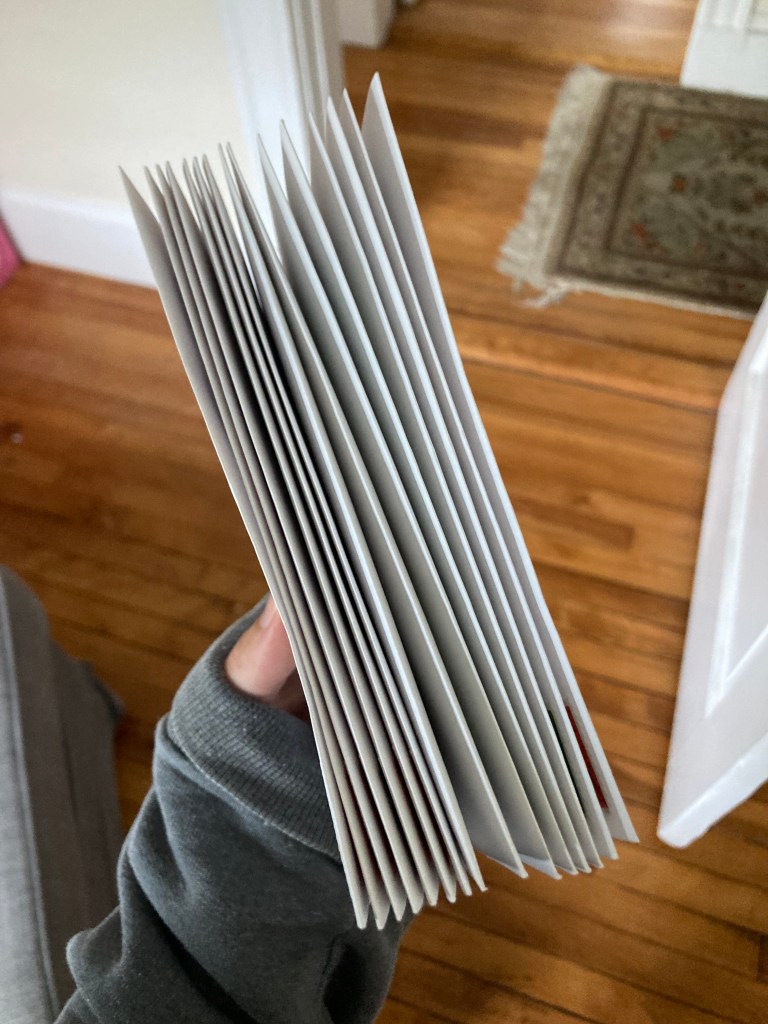
a stack of envelopes going out to subscribers last spring
What happened?
Marketers be marketing
Word got out, folks were yappin’, call it what you will.
Sometime around late-spring / early summer, other people started talking about my newsletter pretty consistently. Even though my list was still pretty small at that point, someone would post about it with almost every new edition, which created a little flywheel of new subscribers each month. I was a little surprised and also thrilled that people were finding it interesting enough to share with others.
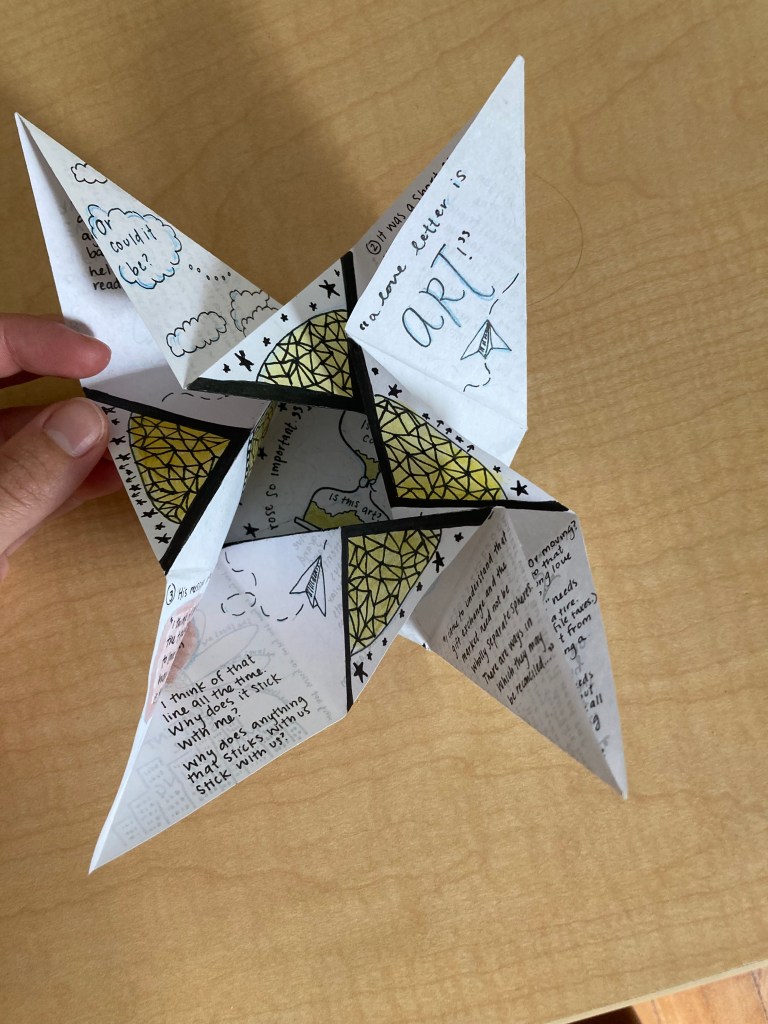
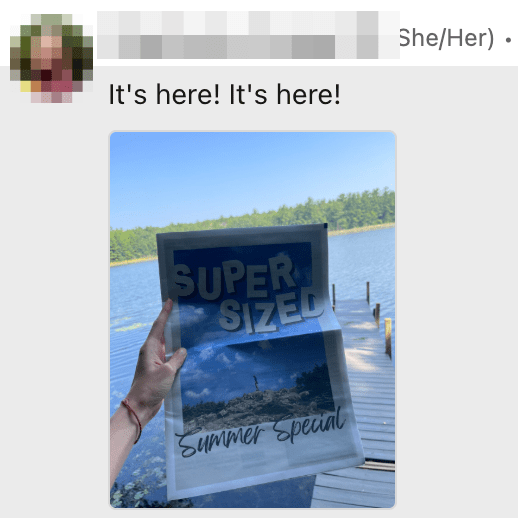
Then, I compounded things a bit by pulling together a really special summer issue — a tabloid-sized newspaper with essays, games, and even guest pieces from a few of my early readers.
That issue was so fun to make and people really loved it. My list grew a TON after that edition.
But by that point, my perspective was changing too.
In the beginning, I mostly thought of my newsletter as a fun little way to stay in touch with folks who knew me or had worked with me. It was a creative outlet and also served the purpose of helping me keep up with folks, or at least, stay top of mind.
But by the summer, I was viewing it — and many of my readers were definitely viewing it — as a “product” in itself.
I started talking about it online, in public spaces and in private conversations, and the flywheel was rolling. I still have never marketed it a ton, but the audience was there and they were excited about it.
By the end of the summer, around 2/3 of my list were people who didn’t know me or knew me only cursorily — they were just excited about the newsletter.
Growing like a weed
I haven’t been very consistent about tracking growth (or where people found me from), because… well, because honestly, it wasn’t a major interest for me. I wasn’t really trying to grow the list, or expecting that it would.
Overall, there have been two really noticeable growth peaks:
The biggest growth in my list came after my special summer issue (I saw a lot of posts online about this one too). I think it was really splashy and definitely unexpected, so people were really surprised and delighted by it. (I was also delighted to see everyone’s reactions!)
My other biggest time of growth was in the late fall. People were definitely posting about it, I was posting about it occasionally (~once a month) and I mentioned it on a few podcasts I went on.
My approach has been pretty much the same: I make something I am interested in, and I try to find the other people who are interested, too. But seeing how many people have been really excited about it, I am slightly more interested now in finding those other people. It’s definitely niche, definitely not for everyone, and I think that is good! But I do want the people who it is for to be able to find it.
I was also really hoping that it would provide a way for me to stay in touch with clients, other freelancers, and general “work people,” and I think it has knocked that hope out of the park. I’ve connected with so many people this year who I likely wouldn’t have otherwise, and I hear from folks every single month after my newsletter goes out. Sometimes I get responses to my email newsletters as well, but usually not. My print newsletter always does, and that’s really important to me.
Looking back, I think my hypothesis was more or less spot-on:
People love novelty, and they’ll be more interested in something tangible that comes to their real mailbox than another email newsletter. Plus, I’ll enjoy it more, which will make the output better for the reader.
People did love receiving something in the mail, people loved that it was fun and different and ~exclusive~ to print. Also, I do enjoy working on it more than I enjoy writing my (actual) email newsletter, and I think readers do sense that joy in the output.
All in all, this experiment has been a smash success, by my standards.
By the Numbers
One thing I LOVE about this newsletter is that there aren’t very many metrics I can track. I love it not because metrics aren’t important — but because I can’t obsess over them if there aren’t any. I know who’s subscribed and if someone unsubscribes. That’s about it.
Here’s the best “by the numbers” breakdown I can offer:
Total envelopes sent in 2025: ~200 Open Rate: ~100% (assumed 😉 ) People’s favorite issues: The summer newspaper edition, the advent calendar, “Goodnight Work,” and anytime I included stickers Number of times I heard no feedback on an issue: 0 Unsubscribes: 28% of my total list (people who have ever subscribed) have unsubscribed. This feels like a pretty good rate to me, considering that the vast majority people who sign up now have never heard of me before. I do offer a free trial month, so a lot of these were folks who signed up for a free trial and didn’t continue. New clients who have found me through my newsletter: 2 (so far, that I know of)
Some hard parts
→ Stripe was a learning curve. In general, Stripe is a good platform and gets the job done, but setting up pricing, sales tax, international shipping, embedding the payment links, etc. etc. etc. required more Googling and Help-Center-reading than I would have liked. (No shade to Stripe.) Overall, I’m happy with Stripe, but I didn’t know what I didn’t know and ended up with several messy workarounds that I’m still working on fixing.
→ Free trials without a credit card saved. When I first set up my checkout page on Stripe, I didn’t check the box to require folks to add a credit card when signing up for a free trial. As a result, when their free trial ended, it just… ended. Whoops. I ended up doing lots of emailing to individual subscribers having to say “Hey, this is awkward, but if you don’t want your free trial to end you have to add a card…”
Some folks were probably happy to let their free trial end automatically, but some folks didn’t want that and then it was kind of a weird process to fix it. I’ve since fixed this, so you add a credit card when signing up, and then Stripe notifies you before it charges you for the first month. Much easier.
→ International shipping. About half of my clients this year were / are based in Europe or the UK. And international shipping is a beast 😩 I didn’t offer it at first because it was a lot to think about, but that also meant that I left out people I’d really like to have included. I do offer international shipping to many countries now, but it’s still a beast (and do not get me started on international sales tax laws).
→ Scaling. This isn’t really a scalable project (and I’m not sure it needs to be, or that I want it to be.) But as my list has grown, scale has continuously confronted me. Every month, I hand-draw and -write the original copy, make copies, get it printed, fold each issue, address the envelopes, etc. etc. In short: I do each step by hand and I think it adds a little je ne sais quoi to the final product.
growing stacks of envelopes and newsletter inserts. I’ve learned to work in batches now!
BUT: I don’t know how much bigger my list can grow before that becomes unsustainable — and I’ll need to either cap my list or start doing fewer steps completely by hand.
I also learned a lot about what can scale. For example, I had a great idea for one zine that would include a little paper “window” on one page that would open to reveal something behind it. Then I thought about cutting that window open and pasting the thing behind it 40+ times on each individual zine… and quickly scrapped the idea. So there are things like that, too.
Scale is helpful in some ways (a larger reader base gives me a little more leverage with funds to do more cool things), but it also places limits on what is feasible for one person to create and duplicate. (And I have pushed those limits, looking at you Advent calendar, cough cough.)
Big learnings and takeaways
→ People can sense the joy in your work (or not), and they do care.
By far, the most common feedback I receive on my newsletter is some variation of “this is so delightful.” Yes, it’s fun to get something in the mail. Yes, stickers slap. Yes, it’s really exciting to see a colorful envelope addressed to you and briefly wonder what fun little thing will be inside this month.
And also, people regularly tell me that they can sense my delight in making it. “I can tell you’re having so much fun with this.” “No one’s having fun with content like you right now.” “It’s so great because I can feel your joy in making this.”
I think that’s part of what makes it special. We can argue up and down the river about how not all content needs to be delightful, blah blah blah and that’s 100% true!! But when we do create something with joy, with intention, when something is very meaningful to us and we are able to share it with others, I think it can resonate — and be remembered — in a much deeper, richer way.
→ Print is so back, baby.
I’ve been seeing SO many other brands and companies start experimenting with print again this year. Perhaps a case of seeing a yellow school bus because I’m looking for one? Totally could be.
But me seeing it also means that it is happening. Print is novel, fun, memorable (often), unexpected, and much less saturated right now than most (all?) digital channels. If you have the resources and the option to experiment with it, it’s worth considering.
→ Yes, zig where others zag — but also, when you can, listen to what makes you YOU.
This is true on both a brand and a personal level.
A lot of people see my print newsletter and think “OH, that is such a good example of zigging where other people zag! Do something different!” And YES. That is totally true. AND also: part of why my newsletter resonates with readers (I think) is because it is so me.
I mean that to say: I thrive with thoughtful, artful, long-form; slow and intentional processes, and space to experiment with lots of ideas. When I’m trying to turn a profit, or when I’m working with clients, I still lean on those skills, but obviously there are also more limitations. Necessarily.
But in my newsletter, those skills are fully highlighted and also serve the medium and align with the output. It’s not a Venn diagram of my best skills and what the project needs, it’s a circle. As a result, I really enjoy making it (see point #1) and it creates a result that’s unique and new, etc. I’m working within my strengths and joys, and it shows.
On a brand level, I think there is so much room for brands to be really leaning into whatever unique thing about their brand they want to highlight and making that a bigger part of their content and marketing. You don’t have to have a blog, or an email newsletter, or a podcast, or a YouTube or a whatever if it doesn’t fit your brand at all. You should lean into what does fit your brand like a glove — something you can do better than most other people — and let that really shine.
working on the “original” copy of one of my early editions
→ Good content should connect you to your audience, and connecting with your audience makes for good content.
One of the best compliments I’ve gotten about my newsletter is from someone I didn’t know prior. In a post they made complimenting my work, they said that getting my newsletter “makes [them] feel like they have a friend.” 🥹
Now, this isn’t the point of all content, but most content should do some connective work. If content is not connecting and resonating with your audience, and it’s not going to change anything about your business or your customers, then what’s the point?
B2B content isn’t art. It doesn’t (shouldn’t) exist for its own sake. It exists to do something.
And one of the things it should do is connect you with your audience.
The flip side is also true: connecting with your audience makes for good content. This is something I feel like everyone knows this and yet it often doesn’t happen. I’ve worked on teams in-house where I talked to customers every day (!) and I’ve worked on in-house teams where I rarely ever talked to customers, so I understand it’s a lot easier said than done.
But ideally, good content shared well gives you an avenue to connect with your customers or your wider audience regularly — to have conversations with them, see what’s resonating, what’s on their minds, etc. etc.
→ Life is good when you slow down.
In today’s fast-paced digital world… it’s good to slow down. A lot, if you can.
The process of making, printing, folding, packaging, and shipping this newsletter is slow, since I do it by hand. There are plenty of ways I could speed it up; so far, I’ve chosen not to. I don’t believe this makes me “better” than other people or assign any moral value to this, but I do believe it has made my life a bit better than it was before.
I really enjoy (usually) the slow, repetitive process once a month. It’s like knitting or coloring, where your hands are working but your brain can kind of check out or slow down. It’s a great time to listen to podcasts or catch up on videos I’ve been meaning to watch or just let my mind wander (and sort through problems and ideas).
In work, we’re constantly asked and expected to accelerate, often far beyond a “human” pace of working. This project has really highlighted for me how valuable it is — for all of my work — to have some work that just goes slow.
preparing for a batch of stuffing
→ Experiment more.
I love doing experiments like this, and I’ve done maybe a half-dozen in the past. Usually I don’t run them past the experiment period, but this one I did, and I’m so glad I tried it. When you’re running a brand in-house, making time, space, budget, and energy to experiment is so hard. But I’ve had some of my best offers, work, and projects come out of small experiments, so I highly, highly recommend experimenting with small tests whenever possible.
Early on, I spent about $10-20 and maybe 5 hours a month making the newsletter. Now, I spend a lot more (on both fronts), but it’s also no longer an experiment — it’s something I’m intentionally choosing to invest in. Starting it as a low-risk, small experiment gave me a way to see if it was worth a bigger investment, without losing too much time, energy, steam, etc. before it ever got off the ground.
Also, meta, but I also experiment a lot with the newsletter itself! If I should blend print and digital, what people respond to, what stands out to people, what is enjoyable to make, what’s possible to make…. etc. etc. I also experiment with lots of formats, including zines, comics, newspapers, essays / letters, and so on. I think this worked well for me (not feeling stuck to a single format or output, seeing what worked) and also for my readers (novelty, excitement, anticipation, etc.).
The idea itself has evolved a lot too. I started with one idea of how the newsletter would look, what kinds of themes and topics I would write about, and so on — and by the end of the year, that has shifted, too.
So moral of the story: be willing to experiment, play around some, test stuff out, and let your ideas evolve as you see what works and talk to your audience. ✅
What’s next
I am keeping the print newsletter going, of course!! If you aren’t already on the list, you can sign up here, and I do offer annual subscriptions as well.
I’m launching my next experiment in the next few weeks 👀 Some of you are already a part of it (!) but if you don’t know yet know what I’m talking about, you’re in for a real treat.
I’m always experimenting, playing, testing, trying. Yes, the things we know work, work for a reason, and we should keep doing those. But it’s also worth testing and experimenting to see where you can align your work with your “zone of genius” and what things that are uniquely you could serve a real need for others. That’s true for me and for you! 🙂
One of my favorite things about having a print newsletter is actually the physicality behind it.
Every month, I have to fold and assemble the newsletters, and then address, stuff, seal, and stamp the envelopes, a process that now takes me, on average, 2-3 hours. It’s “monotonous” work but it’s also very soothing work. At this point, I’ve made a little ritual of it that I look forward to, especially on late afternoons when I have no brain power left but still want to get something checked off my to-do list.
Part of what makes this enjoyable: I’ve started saving videos or things I want to watch or listen to in the background for this task. It feels so good to have something repetitive to do with my hands while I catch up on things I wanted to watch, without feeling bored (“ugh, 27th envelope won’t seal right”) or “binge-y” (“ugh, I just watched YouTube for 2 hours”).
All that to say: here’s everything I watched this month while stuffing (aside from a couple of things I didn’t finish)
I’ve had my fair share of “coffee chat” style networking calls, both good and… well, some you wish you hadn’t agreed to.
But a few weeks ago, I had a very lovely coffee chat with Annie Evans. She was, as they say, a good hang.
At the end of these calls, it’s really common to ask if the person is looking for any particular type of work lately, or what they’re offering, or if there’s anything you can do to help or refer someone their way. It’s a polite, “network-y” thing to do, and I have a standard answer for it.
But at the end of our call, Annie asked me something I don’t think I’ve ever been asked before in a work setting:
“What would it look like for me to be in your corner?”
I think my face probably 😶-ed out for a moment, because I was so taken off-guard. Being asked about who I work with or what kind of work I’m doing right now is very helpful, very professional, always appreciated. There’s absolutely nothing wrong with asking people that.
But what would it look like for someone to be in my corner?
That’s such a more open, expansive, and human question. It says less “How can I help you make some money?” and more “How can I be connected to you? How can I support you? How can I show up for you?” which, in my opinion, just feels a lot nicer.
I can’t even remember exactly what I said to Annie — I wasn’t really quite sure what to say! — but I like this question a lot.
When I think about the people who feel like they are “in my corner” professionally, I think of the folks who:
Subscribe to or read my newsletters or my writing
Send me little comments about, or respond to in some way, my newsletters
Send me interesting things they read or liked that they think I would like too
Bounce ideas off of me, or allow me to do the same for them
Refer me to clients they don’t have the room for, or send me referrals when they hear of someone looking for something I do
Ask for advice, and offer advice when asked
At the end of the day, they’re cool people who just “hang around,” sharing cool things, keeping in touch, liking my stuff, and cheering me on (privately or publicly!) when I do something new.
You don’t have to do anything too special. It’s just nice to know that when you make something and send it out to the world, there will probably be at least a few people who will say “hey, this is cool, keep going.” Like the phrase suggests, it’s someone who just stays… well, in your corner of the world with you.
If you’re reading this, thanks for being in my corner 🥂
What would it look like for me to be in your corner?
When I tell people I started an old-school micro blog, this is often the response.
To be clear, there are no problems with this response — I take it as a compliment. People think this is a cool idea (hey, thanks!!) and wish more people knew about it.
But I also think it highlights just how entrapped we’ve become in the idea that everything needs an audience, especially online. The thing itself is almost secondary: it’s a means to an end; the audience is the end goal.*
Except…
What if I’m mostly just happy to do this for myself? I’m glad to have a place to record work related thoughts and processes and ideas and how I think about things. If other people find that interesting, I’m very glad to share it! Let’s be friends.
But I don’t need it to have an audience for it to be valuable. And I wonder how much more valuable (some) content could be if it was created for a much smaller audience, rather than trying to scale it to huge audiences.
(*Typically because that audience represents a unit of people who can then be sold to and “monetized”. And there’s nothing wrong with building an audience around your work, btw. I’m just suggesting it doesn’t have to always be the only or the primary end.)
I hate typing on my stupid little iPhone keyboard. It’s a big step up from ye olde T9 phone keypads of yore, but STILL.
The benefit: When I want to find a more succinct way to share an idea, I draft it on my phone, not my laptop.
While my full-size laptop keyboard lets me chatter away easily and endlessly, my tiny phone keyboard I hate incentivizes me to find the simplest, shortest way to frame the idea clearly. Tiny keyboard = brevity of thought.
I work in tech and write for a lot of tech companies, so many of the voices I hear chattering away online are also people who work in tech.
And it’s kind of starting to feel like a lot of people don’t really… care about experiencing things for themselves anymore? Like, running tests and doing experiments, trying new things, playing around, tinkering, learning hard skills, doing something poorly to learn how to do it, doing something just for the thrill of it —
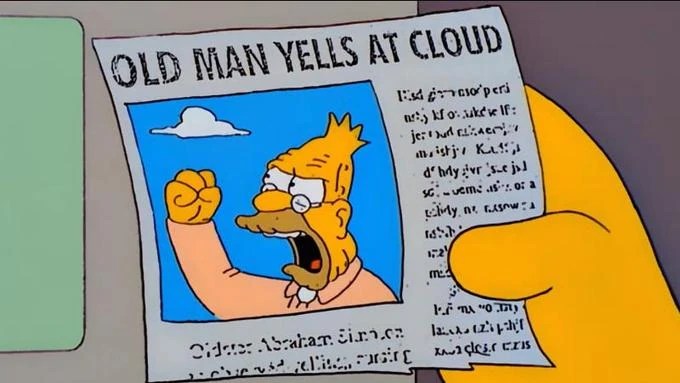
Maybe I’m reading too much into it, or maybe I’m just becoming old-woman-yelling-at-cloud.
But there’s just so much emphasis on how much you can do and get done with AI and so little emphasis on how rewarding and satisfying it can be to do something yourself. It almost feels like the whole point is switching from doing something to having something done.
For example:
“Vibe coding” is replacing “I learned some code to make this funky little tracker on my website that looks bad but I’m really proud of.”
Fancy AI “forecasting” dashboards are replacing running experiments yourself to see firsthand what works and doesn’t.
Using AI to “spar” with you on your latest essay is replacing the tinkering-around-with-the-sentences-myself-until-I-figure-out-what-I-really-wanted-to-say.
Having AI generate an image for you is replacing just going out and using the $1000 camera in your pocket to take a photo yourself.
Not that these use cases are universally bad — I love a good dashboard and computers are typically pretty good (better than me anyway) at analyzing large datasets.
But thinking about it from a content perspective:
The coolest stuff to read is (usually) some kind of first-hand experience: What did you do? What happened? How did it feel? Where’d you get that idea? How’d you make that possible? What parts were hard? How did you get through it? Did you reach your goal?
And it’s kind of sad to me to think that folks might be just as happy to flatten all of that to get to the final product faster — or are just happy enough to experience things vicariously through AI, or automation, or whatever doing the “work” for them, so they can skip to the “results.”
To each their own, I guess.
But for me, I like experiencing things for myself, even if they’re hard, and getting to feel and experience whatever comes with it.