• Where my ideas come from (lately)

    People love asking about and thinking about where ideas come from. Over the past week or so, here’s where my ideas for blog posts, email newsletters, my print newsletter, client proposals, and other work-related stuff have appeared:

    • Standing at the kitchen sink doing the dishes
    • On a walk
    • Waiting for the light to turn red
    • Folding the clean towels
    • An article I read and really appreciated
    • A LinkedIn post that made me mad
    • Sitting on the porch watching people walking their dog down our street
    • Doing the dishes (again)
    • Lying in bed at night trying to fall asleep (sadly I didn’t write this down and did not remember it in the morning, hopefully it’ll come back to me 🥲)
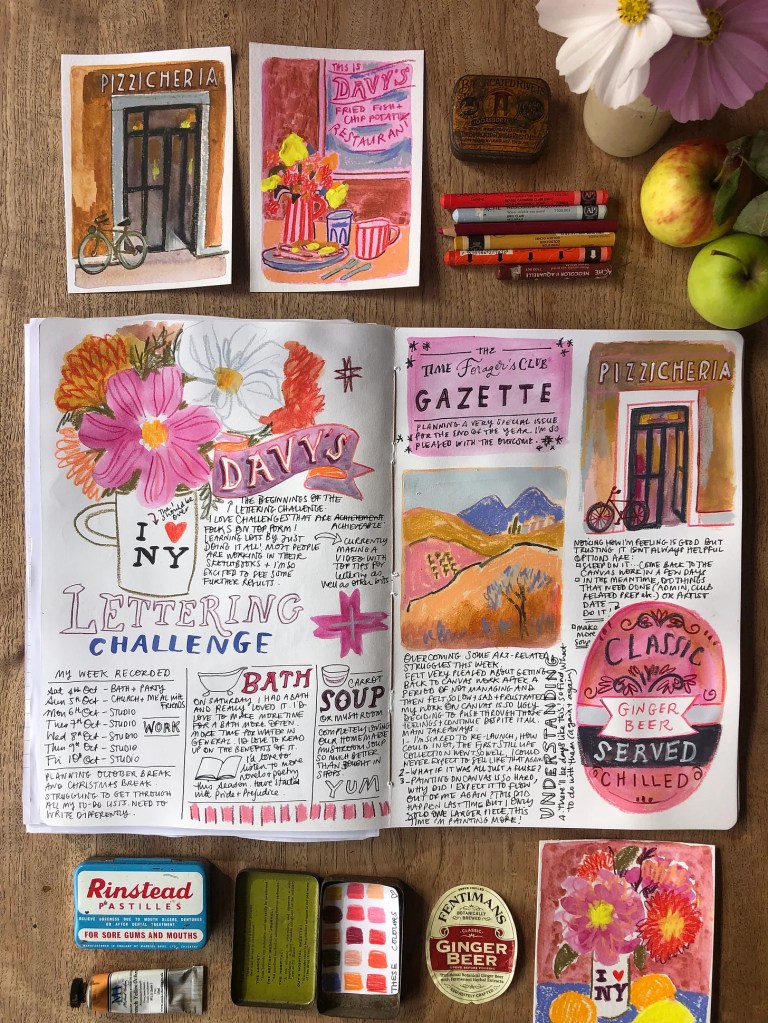
    • While sketching my latest art project
    • On a run in our local forest
    • While eating a sandwich
    • Talking to my roommate about the cool stamps I just bought

    Where the idea for this came from: right after I had an idea for a different topic while doing dishes.

    Number of ideas that came to me while at my computer: 2
    Number of ideas that came to me while not at my computer: 11

    Moral of the story: If you’re feeling stuck, try doing the dishes.

  • In brand guidelines, “write like you’re talking to your best friend” is bad advice

    There, I said it.

    This is the single most common thing I see in brand guides — in any industry — because brands want to come off as approachable, friendly, and empathetic.

    “Write just like you’re talking to a friend.”

    “Be friendly and casual — like you’re talking to a friend.”

    “We’re warm, approachable, and funny (when appropriate). Writing should sound like you’re talking to your best friend.”

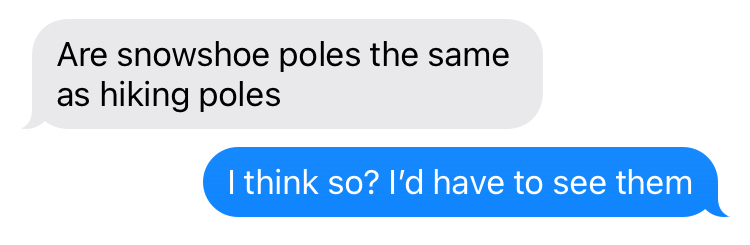
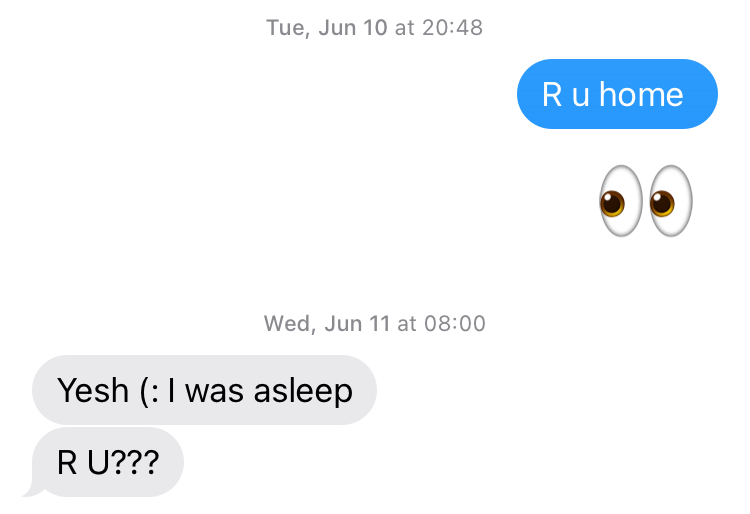
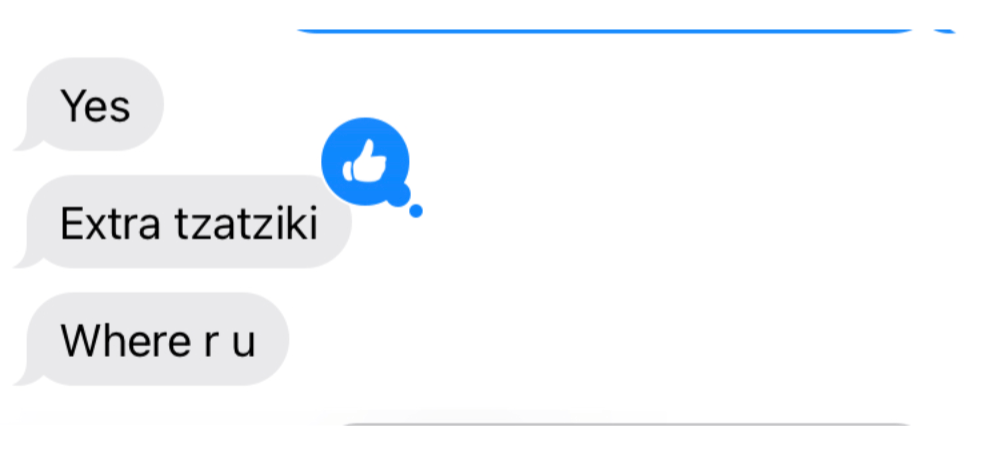
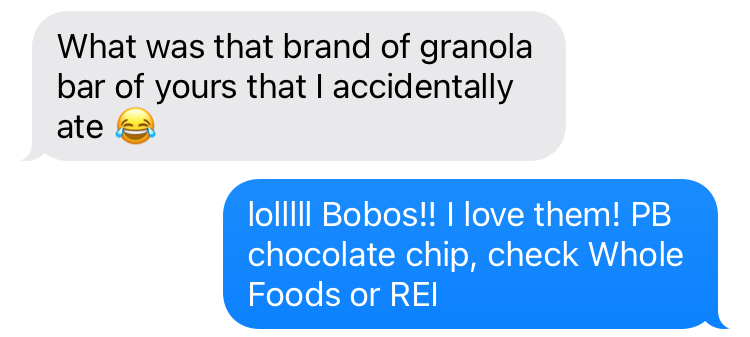
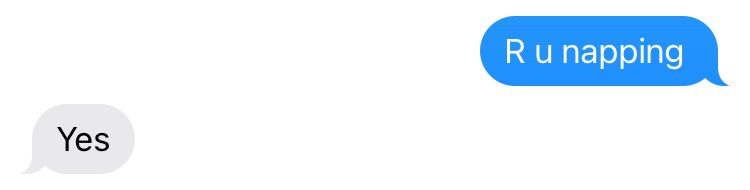
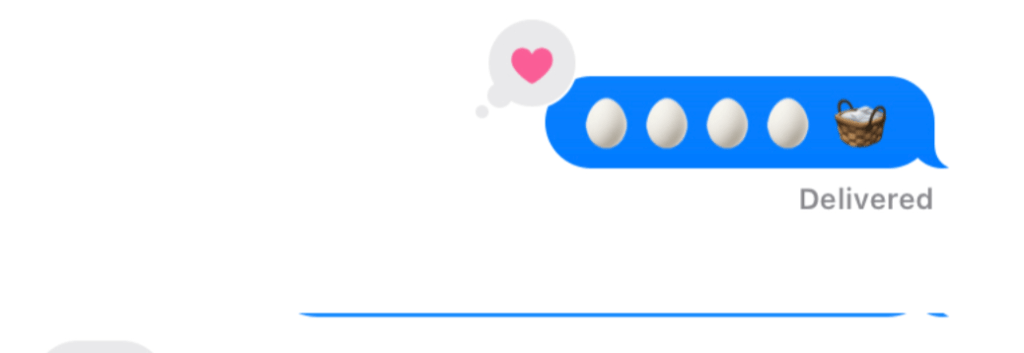
    Really? Because this is how my friends and I talk to each other in writing:

    Now, before y’all come for me: I do know what people mean when they say this, and perhaps most people are more eloquent texters than my friends and I are (okay, I’m sometimes an eloquent texter, but usually not.)

    What people mean is:

    • We want to come off as friendly and approachable.
    • We’re not stiff, buttoned-up, or a “traditionally formal” business company.
    • We want our audience to feel comfortable reading our content.

    However, when you lead with how you want people to feel (this is a good practice, btw) but then articulate what that looks like in generic metaphors or cliches, you don’t actually get the results you want because a bunch of different writers and stakeholders are interpreting those instructions in various ways.

    What exactly does it mean to write like you’re talking to a friend? To be friendly and approachable? To avoid stiff, buttoned-up, or overly formal language?

    To one person, this might mean:

    • Using short, simple sentences and avoiding any big words or technical jargon.
    • Making everything as clear and easy to understand as possible.
    • Using commonplace language and grammar (i.e. contractions, etc.)

    To another person, it might mean:

    • Using slang, humor, jokes, and emojis to connect with the reader and make the piece less formal.
    • Writing in bullet points and using lots of visuals.
    • Adding in lots of anecdotes and weaving a personal narrative through each piece of content.

    And to still another person it might mean:

    • Using longer, more complex sentences and vocab but explaining them fully.
    • Speaking in the first person whenever possible.
    • Being direct, straightforward, and honest.

    Same instructions, different interpretation, and different results.

    I see this a lot because I get the same instructions from many clients, and the final result of how they actually want me to implement those instructions varies a lot. This can happen from company to company, but also within different teams or even different individuals on your team.

    So, when you’re writing your brand or tone of voice guidelines, instead of just saying what the outcome should be (i.e. “be approachable, warm, etc.”), try to include what that would look like for you (i.e. “be approachable and warm — speak in the first person, include personal anecdotes, and speak directly to the reader and their problems; but do shy away from slang and emojis.”).

    (And if you’re not sure which writing or content choices will add up to the brand you want, call me!)

  • Questions to ask before you hit “post”

    Questions I (try to) ask myself before I post something online (or in a group, or etc.):

    • Am I saying something new, useful, and that hasn’t already been said a million times before?
      • If no / if the thing I’m about to say feels insanely obvious to me:
        • Am I sharing it in a new way or a new place?
        • Would the audience who will most likely find this feel like this is new or useful?
        • Am I adding my own perspective or examples that help clarify this idea?
    • Am I the right person to say this thing? Is this relevant somehow to my own experiences?
    • Do I have the right to tell whatever story or example I’m about to share? Would someone I know personally be hurt or upset if they saw this?
      • If it is about a particular person or incident, do I have their permission / goodwill in sharing this, or is it so anonymized they/anybody else would never be able to trace this back to them?
    • Would I be proud to share this with my mom, my best friends, or someone I know in real life?
    • If there were 20 people gathered around in person right now waiting for me to talk, would I feel comfortable saying this thing?
    • Is this something I genuinely care about / know about / have an opinion about, or is it something that I feel like I’m supposed to care about / know about / have an opinion about?
    • Have I thought about this thing for more than 20 minutes? Is this something I’ve talked to more than one person about in real life / one-on-one settings?

  • Building in private is good for you

    You don’t have to build everything in public.

    In fact, when was the last time you made something only for yourself? A watercolor, a sketch, a painting? An essay? A journal entry? A meal?

    When was the last time you did something and didn’t try to mine it for a moral, a LinkedIn lesson, a story to tell someone, a photo for the ‘gram (do people still say that?), etc. etc. Just something that you did for yourself, because you enjoyed it or wanted to try it out.

    “Building in public” has benefits, for sure, for you and for others. It’s good to share stuff you make, and it’s good to make stuff that you want to share.

    But making stuff just for yourself is valuable too, for yourself and for others.
    It allows you test things out with zero stakes before you commit to them, to take big risks, to try out crazy ideas, to see what you like, define your taste or your style — or break out from your “style” — to be honest with yourself, to make something with zero eyes watching you. It can be freeing or fun or crazy or boring. All of that is necessary if you want to create something cool to share with people.

    I’ve been sharing a lot of stuff I’ve been making this year, and it’s been fun.
    But that’s mostly been possible because I’ve spent years (decades?) making a lot of stuff that was just for me, just because I enjoyed it.

  • Don’t make the moldy blueberry mistake

    I love blueberries. (Who doesn’t?)

    I usually buy the smallest container. After all, I’m just one person. But after weeks and weeks of eating that tiny container in two days like a feral toddler, I decided: it was time to level up.

    The big container of blueberries happily accompanied me home. I ate some as I was putting them in the fridge.
    And the following morning with my breakfast.
    And the following morning.
    And the following morning… they were moldy.

    ?!??!

    Now blueberries should last more than a few days. It’s likely that there was a patch of moldy berries in there when I bought it, and that just spread pretty quickly to the rest of the container. But I make this mistake all the time:

    • I really like blueberries, so I buy the biggest container, and then they spoil faster than I can eat them.
    • I get into a good groove doing the weekly crossword I pick up at the library, so I buy a daily crossword calendar and do them every day for two weeks and then ignore the rest.
    • I enjoy doing X thing, and then decide to supersize it because I like it, and then get overwhelmed / bored / burned out / exhausted / realize I don’t like that thing as much as I thought I did, and never do it again.

    I see content teams make this same mistake all the time, too. Their weekly newsletter works for this audience, so why not start sending it out twice a week?! They’ve had some success with SEO, so let’s use AI to quadruple our blog output. That last influencer partnership went well, let’s partner with TEN influencers next time for 10x impact!!!

    Except it doesn’t work like that. I’m not saying don’t double-down on what works. But sometimes what works isn’t just the format, but also the timing. I was annoyed that I was always running out of blueberries, but it turned out that I was actually buying the perfect amount for what I could eat before they went bad.

    Content is the same way. When you find something that works, keep doing it. But don’t forget that “keep doing it” doesn’t always mean “ramp it up 10x and do more of it, faster.” Sometimes that can work. Sometimes it just leaves you with more moldy blueberries.

  • Is formality really a sign of expertise?

    “We need this to be a bit more formal, we’re talking to business leaders here so we need to position ourselves as the expert.”

    Meanwhile, business leaders and experts I know:

    • laughing at and making memes and jokes online
    • posting in all lowercase
    • *sent from my iPhone*
    • watching Bluey with their kids at breakfast

    Formality and “signaled” expertise absolutely have their place. In the same way that design, color theory, and other visual clues can instantly and often subconsciously signal loads of things about a brand, tone, sentence construction, and language does too. In other words:

    plz dont write ur blgs like this

    But overdone formality (you know what I’m talking about) doesn’t actually make you look like an expert, it just makes your writing stuffy, boring, and hard to read. (Sorry.) It feels like how kinda-rich people buy a ton of fancy stuff so they can signal that they’re wealthy, but ultra-wealthy people just wear nice black t-shirts every day.

    If you’re an expert — or you’re interviewing one or writing for one — don’t spend so much time trying to signal that you are one through your tone and diction. Just say what you have to say, and let your expertise speak for you.